Aedes de Venustas: History and Perfumery
Aedes de Venustas is a New York fragrance house and perfumery founded by Robert Gerstner and Karl Bradl in 1995. The name is derived from Latin and is generally translated by the founders as “Temple of Beauty.” The original store opened on 15 Christopher Street in Greenwich Village, where it was conceived as a boutique devoted to exclusive and artisanal fragrances unavailable through conventional department-store distribution.
Bradl and Gerstner had developed an interest in fragrance before establishing the business. In a 2005 interview, Bradl recalled that his fascination with perfume began in the early 1980s and that he subsequently started researching hard-to-find fragrance and skincare brands. The decision to open Aedes followed a search for a suitable retail location in New York. According to Bradl, when the store opened in January 1995, there was no other New York boutique dedicated specifically to what would later become known as niche perfumery.

Karl Bradl and Robert Gerstner
The original Aedes concept was not initially based on manufacturing perfumes of its own. Its principal role was that of a specialist retailer and curator. The founders sought out independent European fragrance houses and introduced them to American customers. L’Artisan Parfumeur was among the earliest and most important brands in the store’s assortment. Over time, Aedes became associated with the distribution and promotion of numerous prestige and niche houses in the United States.
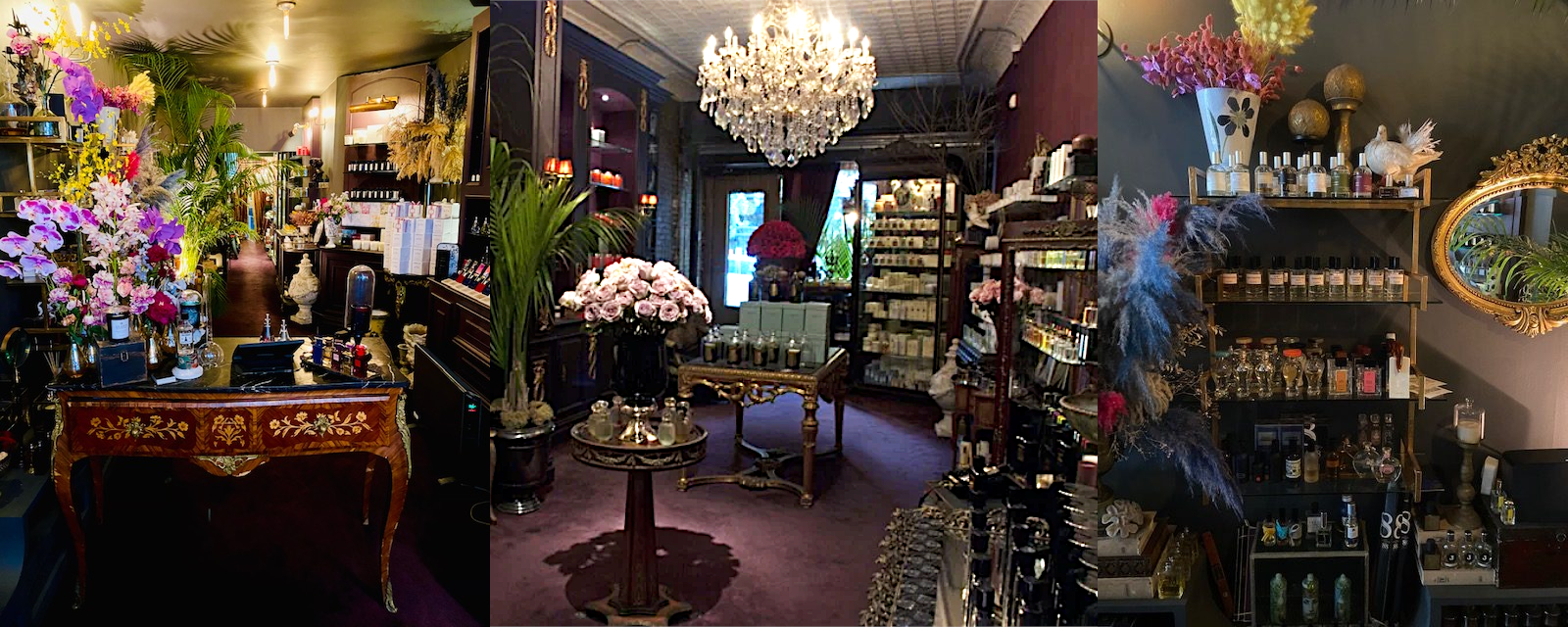
The physical identity of the boutique was also significant. Aedes was designed as an immersive environment rather than a conventional perfume shop, with ornate furnishings, decorative objects, flowers, candles and fragrances presented together. The visual language of the store established the baroque, theatrical aesthetic that later became closely associated with the Aedes de Venustas fragrance line.
From Perfumery to Fragrance House
Aedes’ transition from retailer to fragrance creator began through collaborations rather than an immediately independent collection. For the store’s tenth anniversary, the founders commissioned L’Artisan Parfumeur perfumer Bertrand Duchaufour to create a signature home fragrance. The resulting Aedes de Venustas Parfum d’Ambiance was introduced as a room fragrance in the mid-2000s. In 2008, the composition was adapted into a personal Eau de Parfum, also produced in collaboration with L’Artisan Parfumeur. Duchaufour remained the perfumer behind the project.
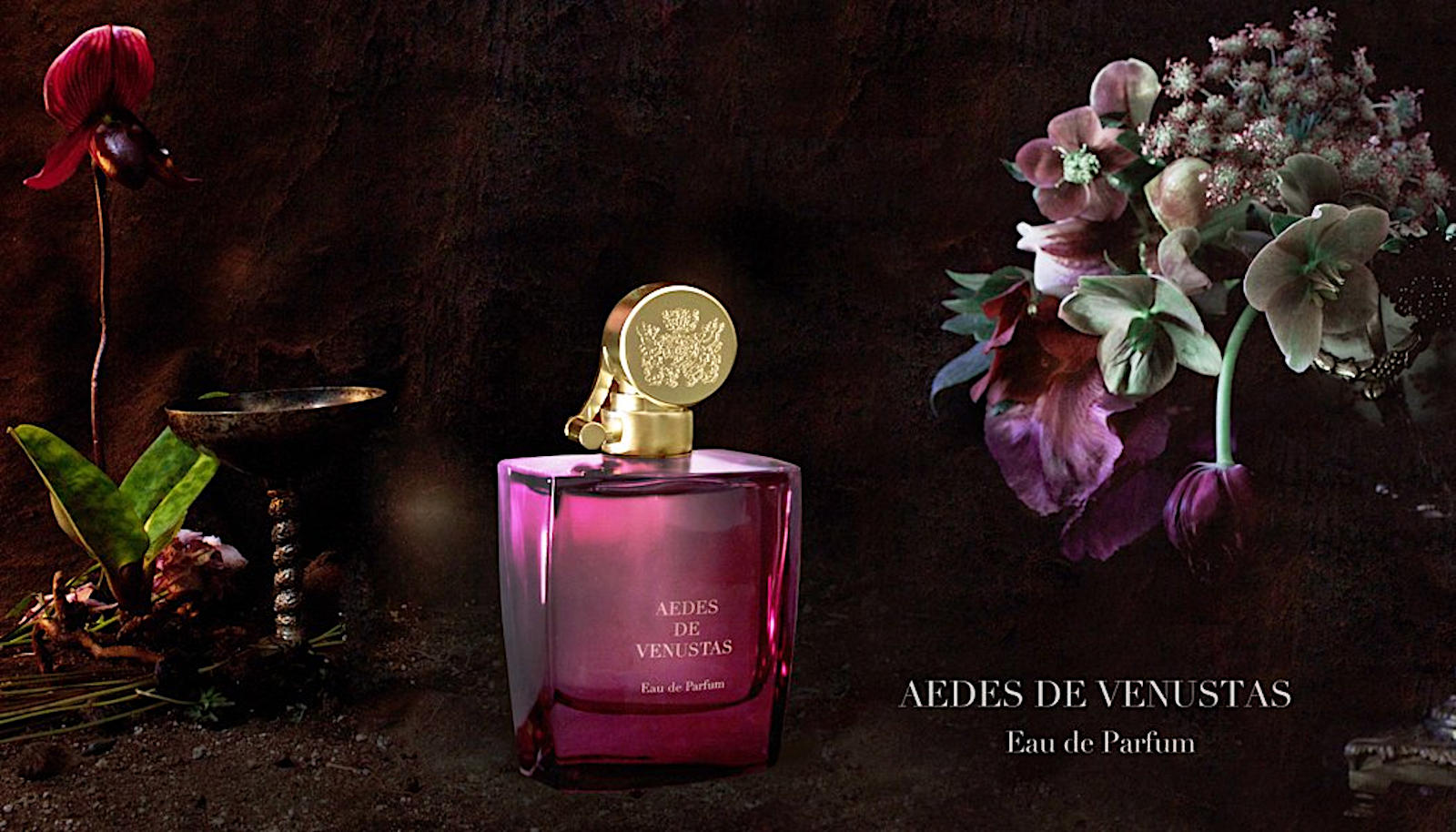
This first Aedes-branded scent was therefore not yet part of an independent Aedes de Venustas perfume collection. The decisive step came in 2012, when the company introduced its first fragrance created as an independent Aedes de Venustas release: Aedes de Venustas Eau de Parfum, subsequently known as Signature. The fragrance was again composed by Bertrand Duchaufour.
Signature was conceived as an unconventional chypre built around a prominent green rhubarb accord. Its documented notes include rhubarb, vetiver, red berries, tomato leaf, incense, green apple, hazelnut and honeysuckle. Rather than following a conventional top-heart-base pyramid, the brand describes the composition as a continuous, circular construction. Duchaufour characterized the creative approach as an “unexpected” olfactory architecture in which the green effect contrasts with dark, resinous incense and chypre elements.
Development of the Aedes de Venustas Collection
Following Signature, Aedes de Venustas developed a collection in which individual fragrances were entrusted to different perfumers and built around distinctive raw materials or olfactory themes.
Iris Nazarena, created by Ralf Schwieger and released in 2013, became one of the collection’s most notable early compositions. In 2014, it received the Perfume Extraordinaire of the Year award from The Fragrance Foundation. The official awards archive identifies the fragrance as “Aedes de Venustas, Iris Nazarena” by perfumer Ralf Schwieger.
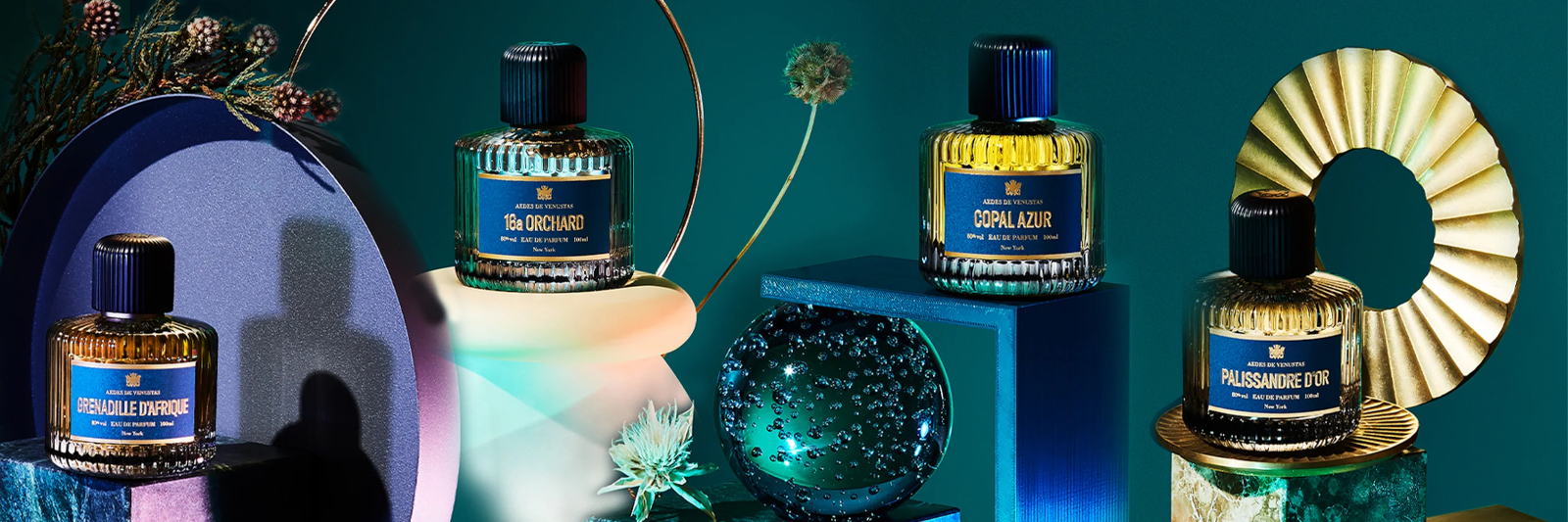
The collection subsequently expanded with Copal Azur (2014), Palissandre d’Or (2015), Cierge de Lune and Grenadille d’Afrique (both 2016), and Pélargonium (2017). The fragrances explored different materials and structures, including incense, rosewood, vanilla and vetiver. This period established Aedes de Venustas as an independent fragrance house rather than simply a retailer carrying other niche brands.
The relationship between the perfumes and the physical identity of Aedes remained central to the brand. The company has consistently presented its fragrances as extensions of the aesthetic established by the New York boutique: luxurious, decorative and deliberately removed from minimalist mainstream perfume design.
The 2021 Relaunch
A significant reorganization of the fragrance collection took place in November 2021. Aedes de Venustas relaunched seven existing fragrances — Signature, Iris Nazarena, Copal Azur, Palissandre d’Or, Cierge de Lune, Grenadille d’Afrique and Pélargonium — in newly designed packaging. The fragrances were transferred into fluted glass bottles with peacock-blue details and matte black caps bearing the Aedes insignia. According to the company, the color references the original Christopher Street location where the brand was established.
The relaunch coincided with Aedes’ move to the Lower East Side. The company states that the perfumery relocated in 2018 and is currently based at 16A Orchard Street in New York.
The 2021 collection also introduced 16a Orchard, a fragrance named after the new address. It was created by perfumer Frank Voelkl and released in 2021. The perfume thus became a direct olfactory reference to the contemporary location of the Aedes perfumery.
Recent Fragrance Activity
Aedes de Venustas has continued to expand its own collection alongside its role as a specialist retailer. Encens Japonais was introduced as an Eau de Parfum and later accompanied by related incense products. Corfu Kumquat followed in 2022, while Amnesia Rose and Café Tabac were introduced in 2023. The current official collection also includes Sueño Latino, created in 2025 by perfumer Gabriela Chelariu.
Corfu Kumquat illustrates the house’s approach to combining a specific place with an olfactory concept. The composition was created with Greek perfumer Ilias Ermenidis and centers on kumquat, supported by Calabrian bergamot, tangerine, mandarin and neroli. The brand explicitly connects the fragrance with Corfu and its cultural and historical associations.
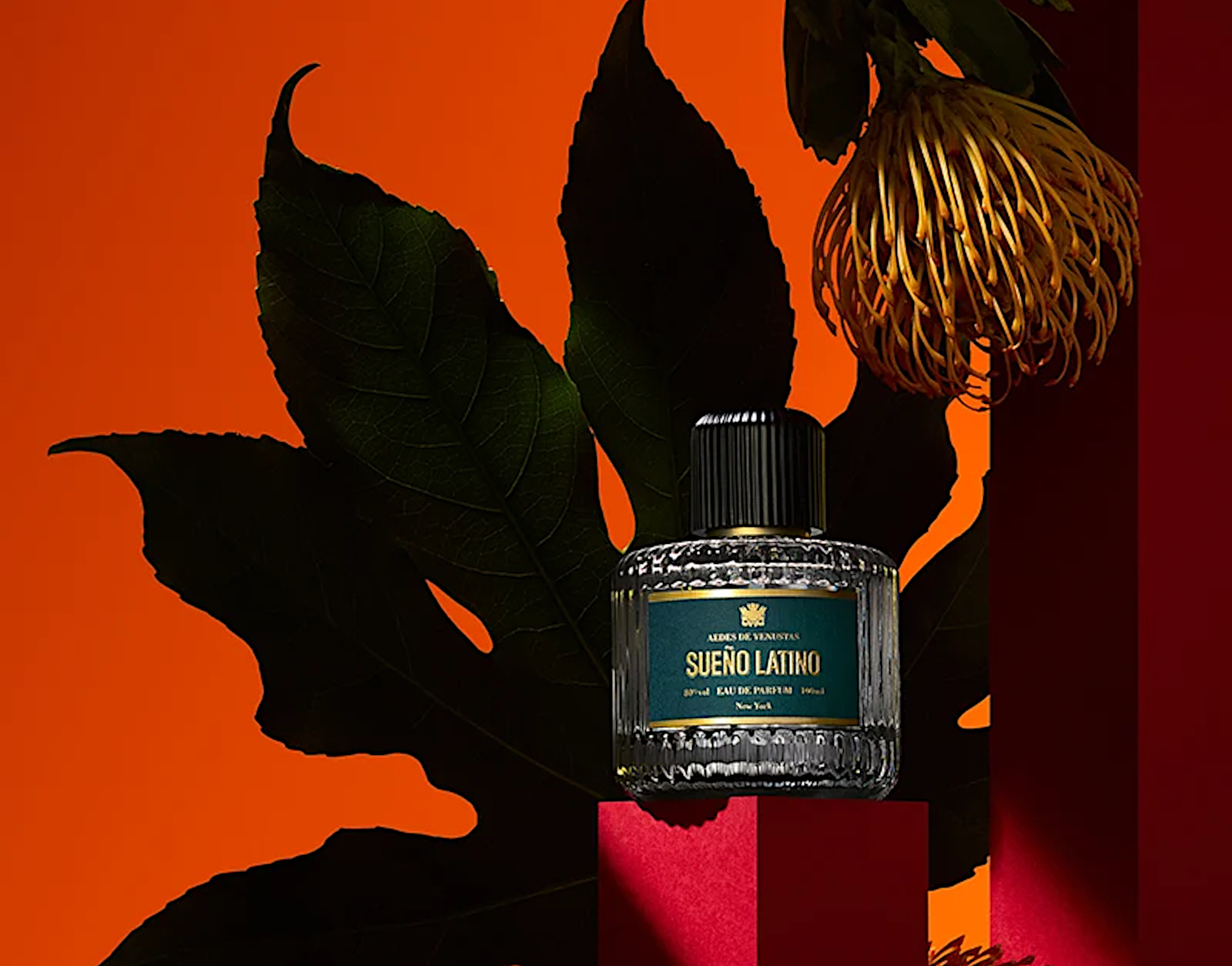
Sueño Latino, meanwhile, represents a later direction in the collection. Its documented composition combines bergamot, Brazilian and Peruvian pink peppers, davana, rosa mango, milky fig, suede musk, guaiac wood, Mysore sandalwood, olibanum, amber and patchouli. The fragrance was created in 2025 by Gabriela Chelariu and is presented as a unisex Eau de Parfum.
Aedes de Venustas Today
Aedes de Venustas therefore has two closely connected identities: an independent New York perfumery established in 1995 and a fragrance house whose own perfume collection emerged gradually from that retail history. The distinction is important: Aedes spent its first years primarily introducing specialized fragrance brands to American customers, while its own collection developed later through collaborations with established perfumers.
Today, the Aedes de Venustas collection encompasses fragrances created across more than a decade, while Aedes Perfumery continues to operate as a specialist retailer at 16A Orchard Street. The company’s official assortment includes both its own fragrances and a broader library of independent perfume, candle and lifestyle brands. The continuity between these two activities — curation and creation — remains fundamental to the identity of Aedes de Venustas.